Foreword
How did I end up writing this?
I was watching videos on the Austrian School of Economics. Then I learnt about praxeology, which made me curious, as it is claimed to be an a priori science of human action. I have wondered if some concepts in economics can be purely a priori, and if not, what the frontiers of a priori economics are. Is the Law of Demand a priori?
I read something very approving of praxeology. The preface to the essay opens with the line, “It was a tragic day when economics, the queen of the social sciences, adopted the methods associated with the natural sciences: empiricism and positivism.” A few lines down it asserts that economics is a subset of praxeology.
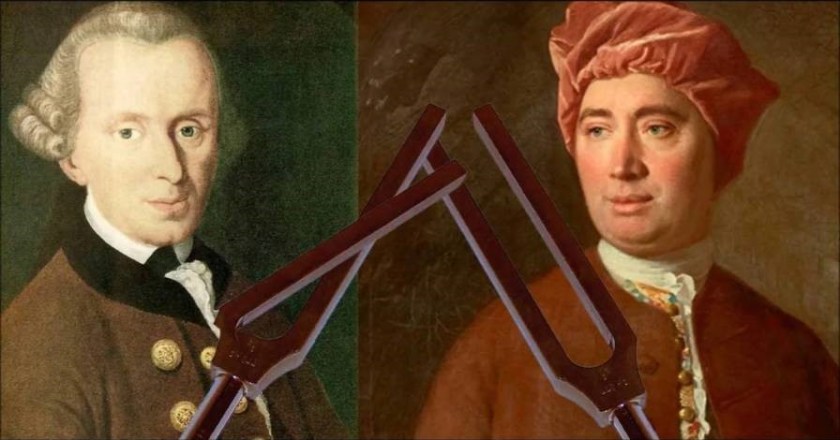
A quarter through the PDF, the essay tells us to turn our attention to the philosophy of Immanuel Kant, more specifically, his famous view that true synthetic a priori propositions exist. That is the topic of this post.
Critical Definitions
Propositions are a priori if its truth can be established independently of experience. Otherwise, they are a posteriori.
Propositions are analytic if they are true solely by virtue of their meaning.
Otherwise, they are synthetic.
Of The Different Species Of Knowledge
The Allegory Of The Triangle 🛆
It is frequently argued that “Angles in a triangle sum to 180°” constitutes a synthetic a priori proposition. That it is a priori is indisputable. But it must be analytic.
We accept “a 2D enclosed shape with 3 sides” as a concept of a triangle. As such we must also accept “interior angles summing to 180°” as a concept contained in “triangle” since it is implied from the preceding concept by necessity. If we do not permit even “a 2D enclosed shape with 3 sides” as a concept of a triangle, then “interior angles summing to 180°”, along with all the other concepts contained in the idea of a triangle, no longer hold. The term “triangle” would just be a placeholder that could represent anything.
Next, consider replacing “triangle” with “square”.
“Angles in a square sum to 180°.”
That is not true, and the only reason why it is false is because “interior angles summing to 360°” is part of the concept of a square. That is necessarily part of the concept of a square because “A square is a 2D enclosed shape with 4 sides” and “A square has 4 right angles” are part of the concept of a square. None of the 3 concepts are of greater transcendental primacy than another. Concepts of the definition of an idea may appear in our minds in a certain order or involve different degrees of cogitation, but these are psychologistic criteria that must be wholly dismissed.
What, then, if one asserts, “Angles in a %#@!$ sum to 180°.”
Don’t care about what the actual symbols used to replace “triangle” are. I used “%#@!$” in this case in order to make plain that the term is an arbitrary, meaningless placeholder.
The term “%#@!$” is utterly devoid of meaning or concepts. Then the statement is incapable of bearing any truth value. It is like saying “Let x be apples”, for example.
As such the concept of a triangle must contain both “Interior angles sum to 180°” and “2D enclosed shape with 3 sides”, or it cannot have any meaning.
But if it has no meaning, it is no different from our dummy placeholder “%#@!$”, which produces a statement with no truth or propositional value.
“Enclosed 2D shape with 3 sides” necessarily implies “interior angles sum to 180°”. That it may not be obvious to a human intellect is irrelevant, because analyticity is independent of the operations of the mind.
The Expansion Of The Allegory
Now we will consider “5 + 7 = 12”.
The concept “5” contains the following predicates:
- That which, when 7 is added to it, gives 12
- That which, when cubed, gives 125
- That which, when subtracted from 2, gives -3
- That which, when integrated from 0 to 1, gives 5
- That which, when put into f(x) = 5x, gives 25
- That which, when put into the sine function, gives -0.96
- That which, when acting as the base of the logarithm of 2.1, gives 0.46
Patently, the list goes on ad infinitum, because the set of numbers has infinite elements, and predicates can be combined in infinite ways to form more predicates.
That a number has infinite predicates of meaning is commonly protested against. I do not know of any non-psychologistic grounds for this objection.
If any one predicate of the concept of “5” is negated, all others are necessarily negated. Each predicate of a concept is the inescapable corollary of all the predicates of that concept less the predicate itself.
One may inveigh against this reasoning, saying that it is circular. But the presence of circular reasoning is an illusion caused by the tautological relationships between the predicates of the concept “5”. As in the concept of a triangle, the predicates have no order of primacy or temporal precedence (except maybe in the subjective perception of conglomerations of particles who call themselves “humans”). They exist together.
Let’s think about the proposition “All bachelors are unmarried”, an uncontroversial analytic a priori statement. The notion of “unmarried” is contained within the concept of “bachelor”.
The notion of there being 2 numbers, “7” and “12”, that have a difference of “5” is contained in the concept of “5”. Hence, just as we say “(Unmarried males) are unmarried”, so we say (12 – 7) + 7 = 12.
But then we note a difference between the nature of “5” and of “bachelor”. “5” has infinite predicates while a moment’s reflection would evince that “bachelor” does not. Does this point to a substantial difference between the 2 concepts?
No, because a concept has as many predicates as the number of elements in the set of ideas its existence depends on. “5” cannot exist independently of “log 7.2” or “67.012”, while “bachelor” can exist independently of “United Nations” or “apple”. For instance, the set for bachelor would be {unmarried, male}. So there’s nothing special about a number having infinite predicates, because it simply follows this general rule.
Final Thoughts
I am an amateur at philosophy with no formal instruction. There are many ideas and arguments I am not aware of.
Of A Future Post
We may consider the principle of causality.
We may consider whether analytic a priori and synthetic a posteriori knowledge are the only kinds possible.
Footnotes
All references to geometry presume a Euclidean framework

 BLOGOPUS
One thought on “An Enquiry Concerning The Critique Of Pure Reason 📓”