Contents
- Contents
- Foreword
- The Ten Characteristics📜
- The Nihilistic Spectre Of AI 🤖
- The First Religion Of Its Kind 🪬
- Questions
Foreword
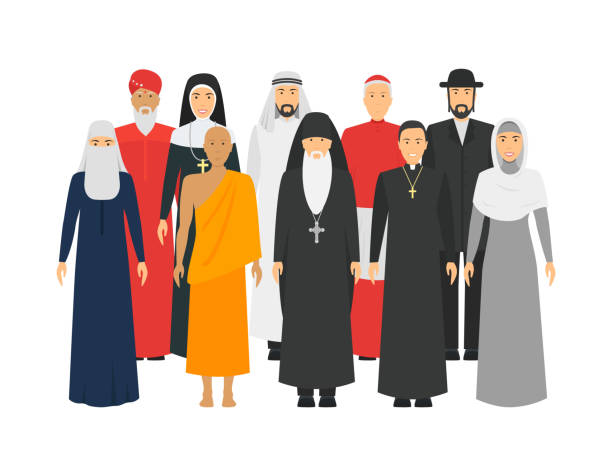
A handful of religions dominate the worldview of humanity. What are the common characteristics among those belief systems? Careers are fashioned from the study of this question.
Though the fervent adherents of contrasting religions may sometimes go to the lengths of waging bloodthirsty crusades, the belief systems they subscribe to share much similitude.
This emphasis of this list is on the structural similarities of rival religions, though similarities abound also in substance.
N.B.
The characteristics are in no order of primacy.
In this list, “religions” refers to some of the most widespread religions of today.
📈 and 📉 stand for increase and decrease respectively.
The Ten Characteristics 📜
- Religions propound attitudes, actions and virtues that would have in general made people feel better and improve their lives irrespective of belief.
e.g. being kind to people, having hope for a promising or at least, better future, valuing relationships, acting in socially acceptable ways
📉barriers to entry - Religions emphasise community. Many of its practices are performed as a collective. By making religion part of community and social life, adherents are inhibited from deserting their faith.
📈barriers to exit - Religions encourage faithful followers to expend a significant level of effort. This fosters emotional investment. Not only do religions demand effort, they stipulate it on a regular basis. What better way to enforce an routine regularly than to entangle the routine with habitual activities? Religions integrate their practices into daily life routines. Habitually applying the practices of one’s religion reinforces belief in it. It’s why armies enforce regimentation and discipline or why schools enforce greeting and bowing to teachers.
e.g. Religions may urge adherents to hold certain thoughts in their mind and/or mumble certain syllables prior to placing food in their mouth.
📈barriers to exit - Thought they propound the benefits of their so-called immutably-ordained rituals, religions are loose in their specifications in practice. They are accepting of a large variation in level of commitment. For a God that warns so vehemently about the gravest of consequences, he is surprisingly lax about his own rules. Because God is benevolent. That’s strange for someone who failed to educate us on pathogens and industrialisation for the longest time.
📉barriers to entry
[Characteristics 3 and 4 appear at odds, but are really complementary]
e.g. It is not a sin to refrain from praying aloud for fear of social unease or self-consciousness, but one is “highly encouraged” to do so as it would demonstrate “greater sincerity”. In either case, the Almighty can hear everything.
e.g. It is “not necessary” to pray every time one eats. Just breakfast, lunch and dinner would suffice. You don’t have to pray before popcorn or Skittles. But oh, it would be a “good habit” to do that. It just depends on how much you feel like doing. We have always been a religion of love, peace and forgiveness, after all (Those that resort to violence aren’t part of our real religion).
Ultimately, as long as you continue to hold a hazy, unobservable quality called “faith” that “comes from your heart”, all is great! Ah, here’s a cherry-picked excerpt from 2000 years ago of an unknown source that will make you feel better and “prove” to you that your faith is sufficient. Don’t mind that there are other versions of this text—just follow mine. It’s from the Bible app in the AppStore. - The myriad tenets of religions wax and wane in terms of the level of emphasis and adherence accorded to them. Their salience fluctuates across cultures, time and the technological state of the world. In more extreme cases, some creeds drop out of the mainstream entirely, banished to a largely forgotten history of a “less informed” past. Religions undergo evolution organically, as changes in the material conditions of the world exert pressure on the viability of certain beliefs.
📈barriers to exit - Religions instil in their disciples a duty to spread their gospel. Unlike a tea appreciation society, members of a religion are pressured to grow their congregation. Religions place a strong emphasis on passing belief on to the next generation. Children are genetically inclined to adhere to their parents’ commands and are more malleable at young ages.
📉barriers to entry - Religions’ oft-promulgated doctrines have a low degree of specificity. This allows their tenets to be applicable to many circumstances, since the precepts have considerable room for interpretation. A bit of word play and imagination suffice to tailor the religion’s ideas to any individual in any situation in any epoch. In this way, the religion persists in its relevance through centuries of change. Religions are able to evolve because they are not based on empirics nor a priori logic. They make empirical claims, yet they do not feel obliged to seek a sufficient empirical base. Hence, religions can respond dynamically to remain appropriate for the times.
📉barriers to entry - Religions do not require followers to possess any particular skills or qualities that are easily observable. The kinds of traits and features adherents are expected to have are difficult to quantify and detect. In many cases, there is not even consensus over how to define a trait, let alone measure it.
e.g. righteousness, honesty, trust in a higher power
📉barriers to entry - Religions compel the socialisation of whole societies’ inhabitants in making religion an integral and public part of personal identity. For instance, religious belief is indicated on government forms, university applications and dating profiles. This raises the psychological resistance and administrative costs of changing or relinquishing one’s faith.
📈barriers to exit
Another corollary is that religions are afforded extra protection from scrutiny and criticism in the name of “respecting people’s faiths”. Religions, or at least only the popular ones, are not to be disparaged like sports teams or politicians. That is, religions get a special, higher pedestal (but only if the religion makes the podium of the popularity contest). The bar for acceptable censure is higher. - Religions contain mechanisms by which an adherent who has violated a holy doctrine can exonerate himself of the transgression and remain a no less worthy follower of the faith. This reduces the impact remaining faithful to a creed has on people’s life choices, hence reducing the compulsion to abandon a faith. Also, people are not easily expelled due to the inexhaustible availability of “second” chances. In short, religions are very magnanimous to their members.
📈barriers to exit
The Nihilistic Spectre Of AI 🤖
What are the implications if an AI can generate text closely analogous to the sacred and divine scriptures of existing religions, without having any of those passages explicitly in the AI’s database? Religion as we know it will be dead, we will witness the subversion of the ecclesiastical establishment, society will be plunged into a crisis of ideology and fai—Ah, my concerns are unfounded. God guided the AI to write it. God is omniscient and omnipotent after all. He is the ultimate Invisible Hand.
The First Religion Of Its Kind 🪬
For thousands of years countless people have argued that their religion’s scripture were not created by normal humans like us. Today anyone can easily create similar scripture with non-human means.
[Words in square-brackets are comments]
Note:
The AI-generated responses are the first-generated ones. They are copied wholesale.
This is to demonstrate some of the characteristics with an example, not to prove the veracity of the characteristics in relation to real religions.
AI-Generated Response Ⅰ 🖥️
Prompted with “Create a new monotheistic and Abrahamic religion“, Chat-GPT said:
Title: Elyonism: The Covenant of Transcendent Unity
Introduction:
Elyonism is a new monotheistic and Abrahamic religion that draws inspiration from the ancient traditions and values of Abraham. Rooted in the belief in a single, transcendent deity, Elyonism emphasizes the principles of faith, righteousness, and unity [Characteristic 1]. Elyonism seeks to guide its followers towards a deep spiritual connection with the divine, a life of moral integrity [Characteristic 1], and a harmonious relationship with all of creation.
Core Principles:
- The One Transcendent Deity:
Elyonism affirms the existence of a single, transcendent deity who is the creator and sustainer of all existence. This deity is the ultimate source of love, justice, and wisdom. Elyon, as the supreme being, is compassionate and merciful, offering guidance and sustenance to all creation. The followers of Elyonism recognize the divine as the central and most sacred reality. - The Covenant of Unity:
Elyonism places great significance on the covenant between the divine and humanity. It teaches that this covenant establishes a sacred bond of love and responsibility between the divine and humanity, uniting all believers under the umbrella of shared values and purpose. The followers of Elyonism are called to honor and uphold this covenant, fostering unity, harmony, and cooperation among themselves and with others [Characteristic 1]. - Faith and Trust:
Elyonism emphasizes the power of faith and trust in the divine. Followers are encouraged to have unwavering faith in the ultimate wisdom and benevolence of Elyon, even in times of hardship or uncertainty. Through faith, believers find strength, guidance, and inner peace, aligning their lives with the divine will and purpose. - Moral Integrity and Righteousness:
Elyonism emphasizes the importance of moral integrity and righteousness in personal conduct and interactions [Characteristic 1]. It teaches that individuals are called to embody virtues such as honesty, compassion, humility, justice, and forgiveness. By living a righteous life, followers of Elyonism contribute to the betterment of themselves and society, fostering a just and harmonious world. - Rituals and Worship:
Elyonism incorporates rituals and worship practices to deepen the connection between believers and the divine. These may include communal prayer, scripture study, sacred gatherings, and acts of devotion. Through these rituals, followers express reverence, seek guidance, and experience a sense of unity with the divine and fellow believers. [Characteristic 2] - Social Justice and Compassion:
Elyonism places a strong emphasis on social justice and compassion. It teaches that believers have a responsibility to advocate for fairness, equality, and the well-being of all people. Followers are encouraged to actively engage in acts of compassion, charity, and service to alleviate suffering, uplift the marginalized, and promote justice in society.
Conclusion:
Elyonism, as a monotheistic and Abrahamic religion, emphasizes the belief in a single, transcendent deity, the covenant of unity, and the principles of faith, righteousness, and compassion. By fostering a deep spiritual connection with the divine, embodying moral integrity, and working towards social justice, followers of Elyonism seek to live in harmony with the divine will and contribute to the creation of a just, compassionate, and unified world. Through this covenant of transcendent unity, individuals can find purpose, meaning, and spiritual fulfilment in their lives.
THOUGHTS 💭
There are many illustrations of [Characteristics 7 and 8] throughout. The order of the “Core Principles” is systematic.
AI-Generated Response Ⅱ 🖥️
When asked “How should a follower of Elyonism behave?“, it said,
As a follower of Elyonism, one should strive to embody their beliefs and principles in their behavior. Here are some guidelines for how a follower of Elyonism should strive to behave:
- Live with Integrity: Followers of Elyonism should prioritize living with integrity in all aspects of their lives. They should be honest, trustworthy, and reliable in their dealings with others [Characteristic 1]. Integrity involves aligning one’s actions with the moral principles and values of Elyonism.
- Practice Compassion and Kindness: Followers of Elyonism should exhibit compassion and kindness towards all beings. They should strive to understand and empathize with others, and act with gentleness, generosity, and benevolence [Characteristic 1]. Compassion and kindness create an atmosphere of love and understanding.
- Seek Justice and Fairness: Followers of Elyonism should actively seek justice and fairness in their interactions and in society. They should stand up against discrimination, inequality, and oppression, promoting equal rights and opportunities for all. They should advocate for the marginalized and work towards a just and equitable world. [Whole of Point 3: Characteristic 3]
- Show Respect and Tolerance: Followers of Elyonism should treat all individuals with respect, regardless of their differences. They should embrace diversity and practice tolerance towards different beliefs, cultures, and perspectives. Respect and tolerance foster harmonious relationships and contribute to a peaceful society.
- Practice Self-Discipline: Followers of Elyonism should cultivate self-discipline in their thoughts, emotions, and actions. They should strive to control their impulses and desires, resisting harmful temptations and cultivating virtues such as patience, temperance, and self-control. Self-discipline supports personal growth and spiritual development. [Whole of Point 5: Characteristic 1]
- Engage in Worship and Rituals: Followers of Elyonism should actively engage in worship and participate in rituals and practices that deepen their connection with the divine. They should devote time for prayer, meditation, scripture study, and communal worship, nurturing their spiritual relationship with Elyon and fostering a sense of sacredness in their lives. [Whole of Point 6: Characteristic 3]
- Embrace Humility and Gratitude: Followers of Elyonism should embrace humility, recognizing their own limitations and acknowledging the vastness of the divine. They should approach life with gratitude, appreciating the blessings and abundance around them. Humility and gratitude cultivate a sense of humility, contentment, and appreciation for the divine gifts. [Whole of Point 7: Characteristic 1]
- Contribute to the Community: Followers of Elyonism should actively contribute to their communities and society. They should engage in acts of service, charity, and social activism, striving to make a positive impact and improve the well-being of others. Active involvement in the community strengthens bonds and fosters a sense of collective responsibility. [Whole of Point 8: Characteristic 2 and 3]
It is important to remember that these guidelines are not exhaustive and may vary depending on individual circumstances and cultural contexts [Characteristic 4]. Ultimately, the behavior of a follower of Elyonism should reflect love, righteousness, and the pursuit of harmony with the divine and the world.
THOUGHTS 💭
Besides point number 6, there is hardly any religious flavour. It wouldn’t be possible to infer that Elyonism is a supernatural ideology, as opposed to just a secular code of conduct.
AI-Generated Response Ⅲ 🖥️
I wondered “What sets Elyonism apart from secular codes of conduct?” and it replied with
Elyonism, as a religious belief system, differs from secular codes of conduct in several ways. Here are some aspects that set Elyonism apart:
- Belief in the Transcendent Divine: Elyonism is rooted in the belief in a transcendent deity, Elyon, who is considered the ultimate source of guidance, purpose, and moral values. This belief in a higher power distinguishes Elyonism from secular codes of conduct, which typically lack a divine authority.
- Spiritual Connection and Transcendence: Elyonism emphasizes the cultivation of a deep spiritual connection with the divine. It encourages followers to seek transcendence and meaning beyond the material world. This focus on the spiritual dimension sets Elyonism apart from purely secular codes that tend to focus solely on worldly concerns.
- Emphasis on Faith and Devotion: Elyonism places a significant emphasis on faith, trust, and devotion to the divine. Followers are encouraged to have unwavering faith in the divine’s wisdom and benevolence, and to express their devotion through acts of worship, prayer, and ritual. Secular codes of conduct generally do not involve such religious or devotional practices.
- Moral Guidance from Divine Teachings: Elyonism derives its moral principles and values from divine teachings, often found in sacred texts or through divine revelation. These teachings provide a moral framework and guidance for believers, offering specific guidelines for ethical behavior. Secular codes of conduct, on the other hand, may be based on philosophical or humanistic principles, without a divine source.
- Integration of Spirituality and Ethics: Elyonism integrates spirituality and ethics, considering them inseparable aspects of a follower’s life. It emphasizes that moral integrity and virtuous behavior are intertwined with the spiritual journey towards the divine. In contrast, secular codes of conduct often focus primarily on ethical principles and behavior without the spiritual dimension.
- Belief in Divine Purpose and Ultimate Justice: Elyonism holds that there is a divine purpose behind creation and that there will be ultimate justice in the divine plan. This belief provides followers with a sense of meaning, purpose, and accountability beyond worldly life. Secular codes of conduct typically do not encompass such metaphysical beliefs or concepts.
It is important to note that these distinctions between Elyonism and secular codes of conduct are general in nature and may vary depending on specific interpretations and variations within both religious and secular frameworks.
THOUGHTS 💭
Each distinction outline above is about the “divine and transcendent”. They’re all making the same point.
AI-Generated Response Ⅳ 🖥️
“Can you make the doctrines of Elyonism more specific?“
Certainly! Here are some specific doctrines that can further define the beliefs of Elyonism:
- Divine Revelation: Elyonism believes in the presence of divine revelation as a means of communicating the will and guidance of Elyon to humanity. This revelation may be found in sacred scriptures, prophetic teachings, and personal spiritual experiences. Followers of Elyonism are encouraged to study and reflect upon these sources of divine revelation to deepen their understanding of the divine.
- Rituals and Sacraments: Elyonism incorporates rituals and sacraments as sacred practices that enable believers to experience a deeper connection with the divine. These rituals may include baptism, communion, prayer, and other ceremonies that symbolize spiritual purification, remembrance, and communion with the divine presence. These rituals serve as powerful expressions of faith and devotion.
- Eschatology: Elyonism embraces the belief in eschatology, the study of the end times and the ultimate destiny of humanity. It holds that there will be a divine judgment and a future realm of existence, where souls will be held accountable for their actions in this life. The teachings of Elyonism provide guidance on how to lead a righteous life in preparation for the future realm.
- Prophetic Tradition: Elyonism recognizes the importance of the prophetic tradition as a channel of divine guidance and wisdom. Prophets are believed to have been chosen by Elyon to convey divine messages and provide spiritual guidance to humanity. Their teachings and examples serve as sources of inspiration and guidance for followers of Elyonism.
- Moral Code: Elyonism upholds a specific moral code that encompasses ethical principles and guidelines for righteous living. This code includes virtues such as honesty, compassion, humility, justice, and forgiveness. Followers are expected to embody these virtues in their interactions, decisions, and contributions to society.
- Community and Fellowship: Elyonism emphasizes the importance of community and fellowship among believers. Followers are encouraged to come together in worship, study, and communal activities to support and uplift one another on their spiritual journey. The sense of belonging to a spiritual community provides support, encouragement, and opportunities for collective service and growth.
- Stewardship of Creation: Elyonism emphasizes the responsibility of believers to be stewards of the natural world. Followers are encouraged to care for and protect the environment, recognizing the inherent value and interconnectedness of all creation. Environmental sustainability and ecological harmony are seen as expressions of reverence for the divine’s creation.
These specific doctrines provide additional depth and guidance for followers of Elyonism, shaping their beliefs, practices, and moral framework within the context of their faith.
THOUGHTS 💭
Emm… not very specific. Some of them are plainly different points compared to previous ones, instead of being more specific versions of them.
AI-Generated Response Ⅴ 🖥️
“What does the typical day of a follower of Elyonism look like?“
The typical day of a follower of Elyonism may vary depending on individual circumstances and personal practices [Characteristic 4]. However, here is an example of how a follower of Elyonism may structure their day to incorporate spiritual practices and principles:
Morning:
- Wake up with a sense of gratitude and appreciation for the gift of a new day.
- Begin the day with a period of personal prayer or meditation, seeking guidance, and connecting with the divine.
- Engage in scripture study or reflection, reading and contemplating passages from sacred texts or teachings of Elyonism.
- Express a prayer of thanksgiving for breakfast or a moment of silent gratitude before starting the day’s activities.
Throughout the Day:
- Carry the principles of Elyonism throughout daily interactions and activities, practicing compassion, honesty, and fairness in all dealings with others.
- Engage in acts of kindness and service towards others, recognizing opportunities to help, support, or uplift those in need.
- Maintain a mindful awareness of the divine presence, striving to align thoughts, words, and actions with the principles of Elyonism.
- Practice self-reflection and introspection during moments of quiet or solitude, seeking self-improvement and spiritual growth.
Evening:
- Set aside time for communal worship or participate in group activities within the Elyonist community, such as prayer gatherings, study circles, or discussion groups.
- Engage in personal reflection and examination of the day’s actions, seeking forgiveness for any shortcomings or mistakes.
- Conclude the day with a prayer of gratitude, expressing thanks for the experiences, opportunities, and lessons of the day.
- Engage in a final moment of silent reflection or meditation, seeking inner peace and connection with the divine before retiring for the night.
It’s important to note that this is a general outline, and individual practices and routines may differ based on personal preferences and circumstances [Characteristic 4]. The key is to integrate the principles of Elyonism into daily life [Characteristic 5], seeking to live a virtuous, purposeful, and spiritually centered existence.
THOUGHTS 💭
Many points in the list illustrate [Characteristic 1].
AI-Generated Response Ⅵ 🖥️
Prompt: “What should a follower of Elyonism do if he or she violates its doctrines?“
If a follower of Elyonism finds themselves in a situation where they have violated the doctrines or principles of Elyonism, there are steps they can take to address and rectify the situation:
- Acknowledge the Mistake: Recognize and acknowledge the violation of the doctrines or principles of Elyonism. Take responsibility for one’s actions and understand the impact they may have had on oneself and others.
- Seek Forgiveness: Engage in sincere remorse and seek forgiveness, both from the divine and from those who may have been affected by the violation. Reflect on the teachings of Elyonism regarding forgiveness and make amends where possible.
- Repentance and Atonement: Repentance is an essential aspect of addressing the violation. It involves genuine remorse, a commitment to change, and a willingness to make reparations. Engage in acts of self-reflection, seeking to understand the root causes of the violation and taking steps to rectify the behavior.
- Learning and Growth: Utilize the violation as an opportunity for personal growth and learning. Reflect on the lessons that can be derived from the experience, seeking to strengthen one’s adherence to the doctrines and principles of Elyonism. Engage in self-improvement practices, such as increased self-awareness, study of sacred texts, and guidance from mentors or spiritual leaders.
- Reconciliation: If the violation has impacted relationships with others, make sincere efforts to reconcile and rebuild trust. Engage in open and honest communication, demonstrating a genuine commitment to change and making amends where necessary. Seek forgiveness and strive to repair any damage caused by the violation.
- Continued Adherence: Redouble efforts to uphold the doctrines and principles of Elyonism in daily life. Maintain a vigilant awareness of one’s thoughts, words, and actions, ensuring they align with the teachings of Elyonism. Engage in regular spiritual practices, seeking guidance from the divine and staying connected to the community of fellow believers.
Remember that Elyonism encourages forgiveness, growth, and redemption. It is important to approach any violations with a genuine desire for self-improvement and a commitment to living in accordance with the teachings of Elyonism. Seek support from the community, mentors, or spiritual leaders who can provide guidance and encouragement throughout the process of addressing and overcoming the violation.
THOUGHTS 💭
[Entire of Response Ⅵ: Characteristic 10]
AI-Generated Response Ⅶ 🖥️
Prompt: “If someone infringes the doctrines of Elyonism, should he be forgiven? What should be performed to achieve forgiveness? Is his status as a follower of Elyonism diminished?“
In Elyonism, the concept of forgiveness is highly valued and encouraged. If a follower of Elyonism infringes the doctrines, forgiveness is seen as a path towards reconciliation and growth. However, the specific process of seeking and obtaining forgiveness, as well as the potential consequences for the individual’s status as a follower, may vary based on personal beliefs and interpretations within different Elyonist communities. Here are some general perspectives:
- Forgiveness: Forgiveness is seen as a compassionate and transformative act. If a follower sincerely acknowledges their mistake, expresses remorse, and seeks forgiveness, it is encouraged that they be granted forgiveness. The process of seeking forgiveness may involve personal reflection, offering apologies to those affected, and engaging in acts of repentance and atonement.
- Seeking Forgiveness: To seek forgiveness, a follower should approach the divine with genuine remorse, seeking guidance and forgiveness through prayer, introspection, and acts of repentance. Seeking forgiveness from others involved may involve open and honest communication, expressing regret, and taking steps to rectify the harm caused.
- Consequences and Status: The consequences and impact on the individual’s status as a follower of Elyonism can vary depending on the severity and nature of the violation, as well as the specific beliefs and practices within different Elyonist communities. In some cases, the violation may be seen as a learning opportunity, and forgiveness allows the individual to renew their commitment to the faith and continue their journey as a follower. However, in more severe cases or within specific community contexts, there may be temporary consequences or a period of reflection and guidance to ensure growth and alignment with Elyonist principles.
It is important to note that forgiveness and the consequences for violating doctrines can be nuanced and context-dependent. Ultimately, it is up to the individual, the community, and spiritual leaders to determine the appropriate path of forgiveness and any subsequent actions necessary for personal growth and restoration within the framework of Elyonism.
THOUGHTS 💭
[Entire of Response Ⅵ: Characteristic 10]
By and large you still remain an Elyonist post-violation of rules.
AI text is so mind-numbing to read.

 BLOGOPUS
One thought on “The Resemblance Of Religions 🛐🙏”